

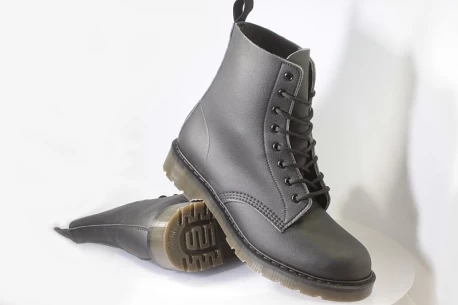
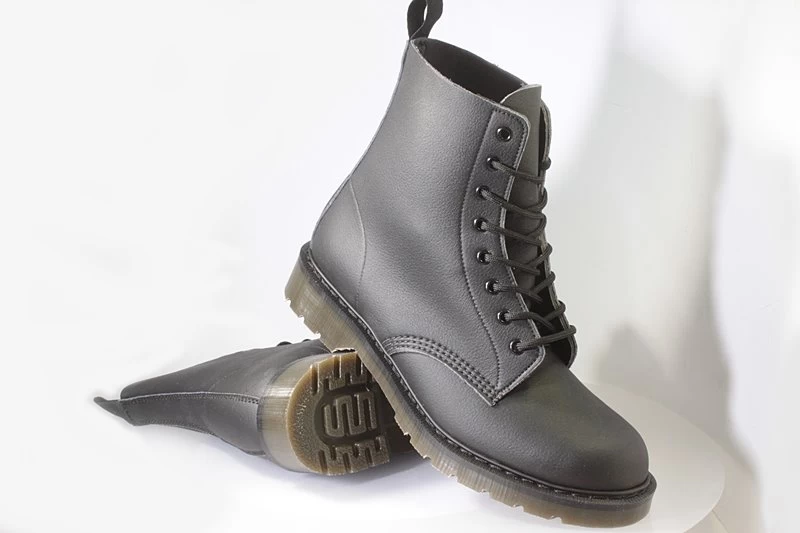
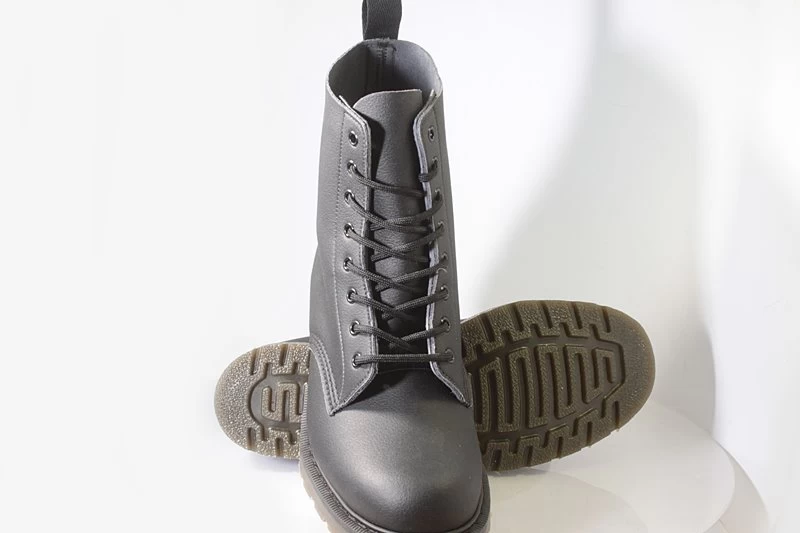
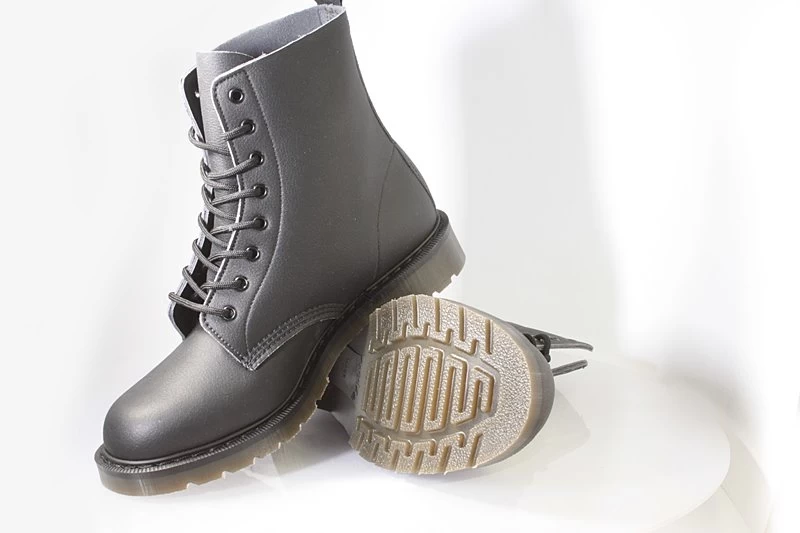
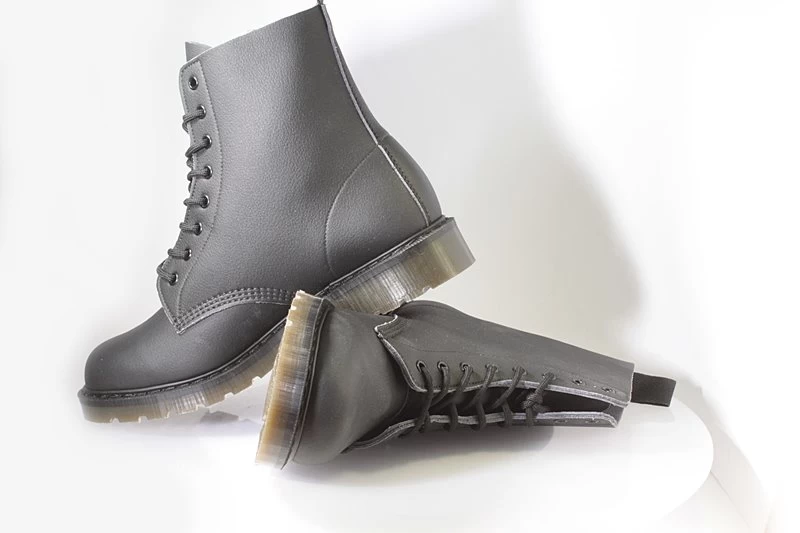
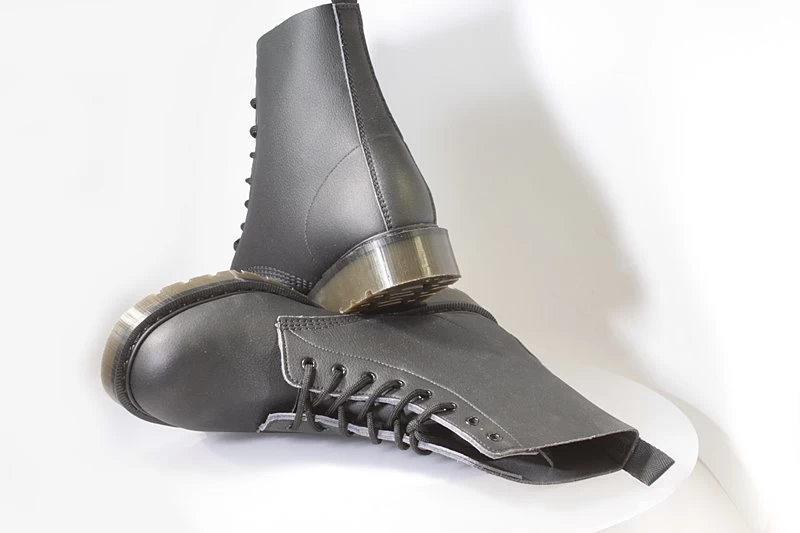
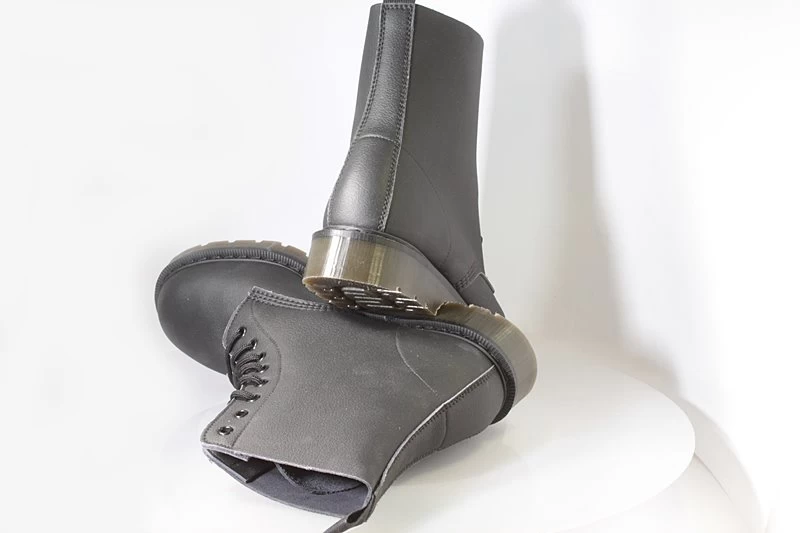

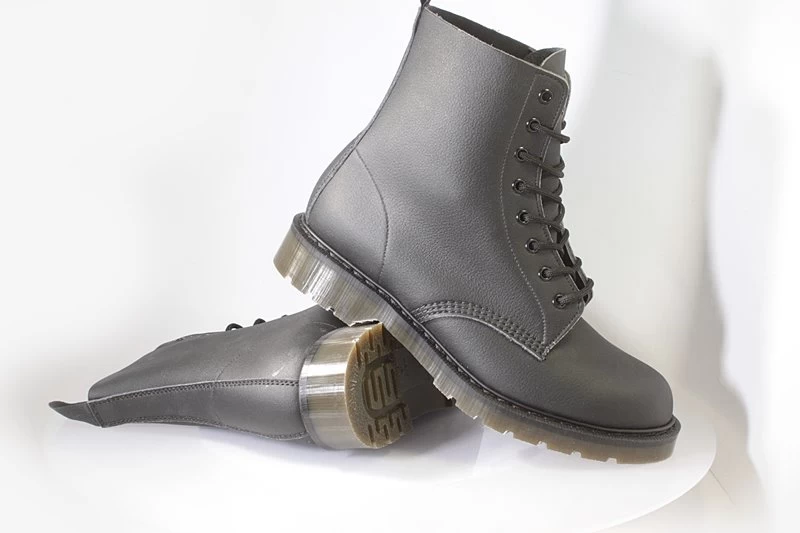
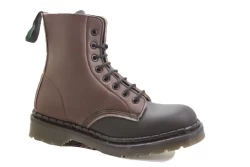
Boot 8 lace
Reference:

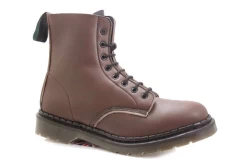
Vegan boots in the classic Tredair T200 style with a 3 layer bouncing sole that moulds to the shape of your feet at the front. Like any ankle boot, it can lace round different-shaped feet and can be worn looser than shoes without falling off, even if you don't lace-up to the top.
Goodyear-welted boots like these are sewn together at the sides, allowing more space for layers of sole
pack ■ 1.20 kg, ↔ 23.0 cm, ⤢ 33.0 cm, ↕ 16.0 cm,
In the UK we can probably send heavier parcels for the same price by courier.
More info
Some Bouncing Boot sizes are available in Brown, or Brown and black combinations - find them on the size search for http://veganline.com/Tredair-Bouncing
A lot of people wear Tredair as work boots for vegans, as they suit jobs for people who are on their feet all day.
The entire range, the plastic soles, and the footbeds and boxes are UK-made with the microfibre, laces and mid-sole coming from Europe, mainly Spain. Boxes are standard recycled brown corrugated cardboard made out of council papar & cardboard collections- maybe the newspapers you threw away a year or two ago.
It is possible to replace the sole but expensive at the moment; we can sell you oversize soles at cost which is £5 a pair plus postage.
UK Social Security probably in proportion to
09.6%    spent on Health
05.5%    spent on Education
8.13 out of 10 on Human Rights Index
8.52 out of 10 on Democracy_Index
1.08 units of C02 per unit of electricity (.23 in the grid)
0.00 km 0 miles   Foodmiles.com
Also, people in any country can help industry everywhere by giving it a sympathetic home market, rather than just buying international brands.
Product country information
UK Social Security  hard to label but probably in proportion to
09.6% spent on      Health
05.5% spent on      Education
8.13 out of 10 on   Human Rights Index (news HRW ; Amnesty )
8.52 out of 10 on   Democracy_Index / votes or "full democracy"
1.08 units of C02   per unit of electricity (.23 in the grid) more
0.00 km 0 miles     Foodmiles.com
Social Security Quick View (Wikipedia)
Costs like social security, health and education reduce what's left to advertise a brand. You can draw your own brand, like a smiley face or a black spot or something if you want.
Product Information
| Material | 2mm vegan leather (microfibre) with a breathable plastic coating, Durable except for the coating, Vegan |
| Size System | English third-inch lengths. One smaller than US mens. Euro translations on the left. |
| Sizing Name | EN |
| Sizing Gender | Unisex |
| Gender, fit | Unisex vegan shoes boots, vegan boots, belts sandals & slippers |
| Colour | Black |
| Soft mid-sole | Bungee rubber under the ball of the foot, that adds a slight bounce and allows the footbed to mould |
| Footbed | Cellulose board that moulds to the shape of your feet if used over a mid-sole |
| Toe Cap | Toe puff to maintain the toe shape, with no impact resistance |
| Fastening | 8 lace holes each side |
| Washing | Don't soak as the footbed swells. Otherwise, hand washing with soap is fine. Instinct, risk & thought apply. |
| Drying | towel-dry the inside toe area and leave in a warm or windy place for several hours |
| Wear-out | Durable. The shine rubs-off the upper material in places but is easy to blacken. Then after miles or years, the sole wears thin enough to crack and is expensive to replace. |
| Compostable | no - but we sell replacement soles and the uppers last a long time |
| Pack | Corrugated cardboard is recycled. Often wrapped in second-use paper so returned boxes can be re-used. |
| Category | 187 |
| Brand | Veganline |
| Vegan of course | Vegan |
9 more vegan shoes boots and belts:
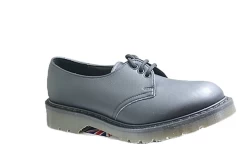
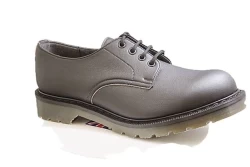
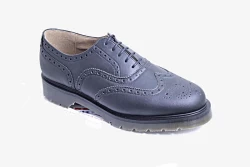
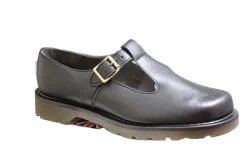
Colour: Black
Size System: EN Unisex
Brand: Veganline
Upper Material: 2mm vegan leather (microfibre) with a breathable plastic coating, Durable except for the coating, Vegan
Google Product Category: