| Hers & Feminine shoes | His & Unisex shoes | His & Unisex shoes | Vegan Accessories | Cart |
|---|---|---|---|---|
|
1"
vegan court shoe 1" canvas shoes Sandals Loafers |
Bouncing
Boots& Shoes Mixed or Mainly Brown Office school& Brogue shoes Camouflage Boots& Shoes Unswoosher tyre sole boot |
Welfare
State canvas boot Ethletic fairtrade organic Safety Boot& Shoe (white) Wellington boot Football & Astroturf boot |
Vegan
belts with soft straps Slippers Safety slippers to reduce falls Riotstopper Thermal T shirts Mens' Jackets |
about
us; delivery, contact search & site map Ethics, Vegan Recipes Footwear lasts for sale News / Facebook |
| <bouncing shoe | Veganline.com | camouflage > | ||
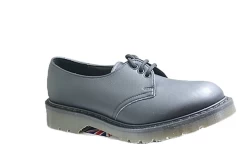
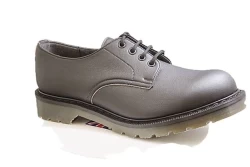
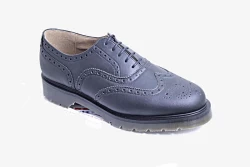
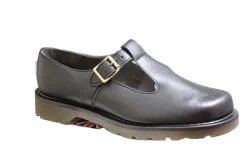
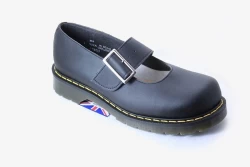
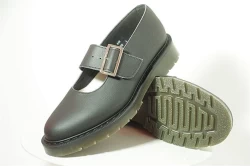
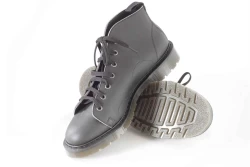
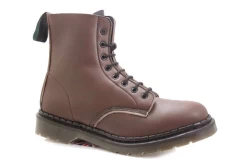
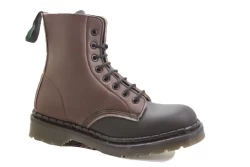
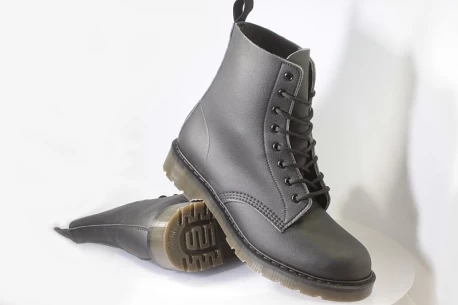
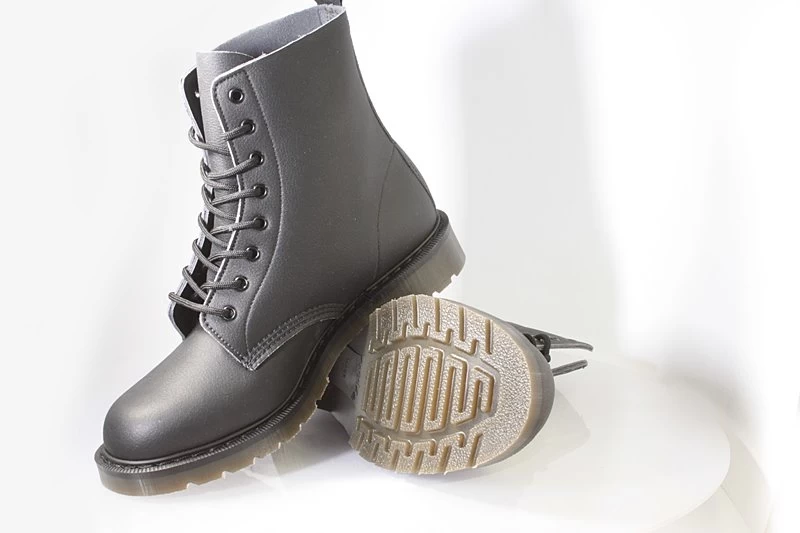
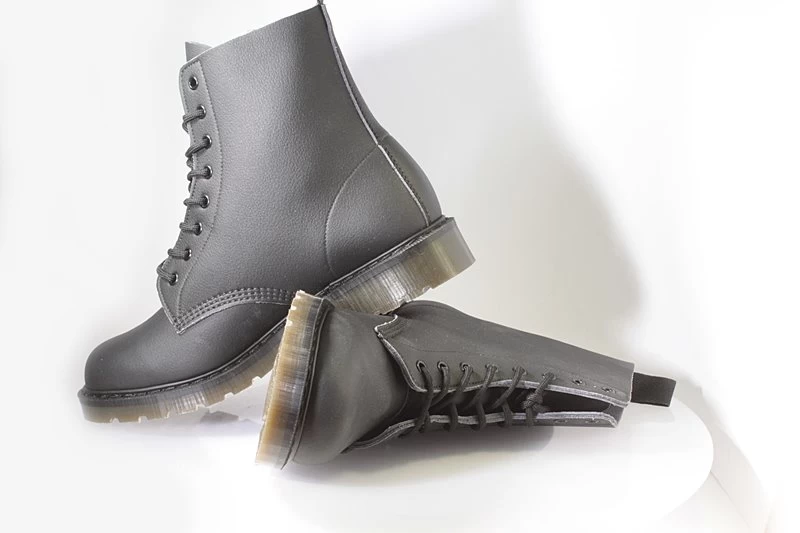
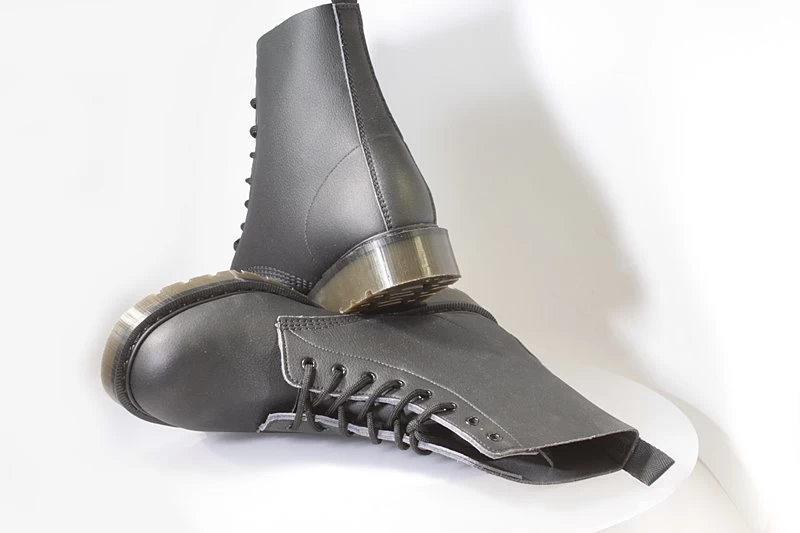
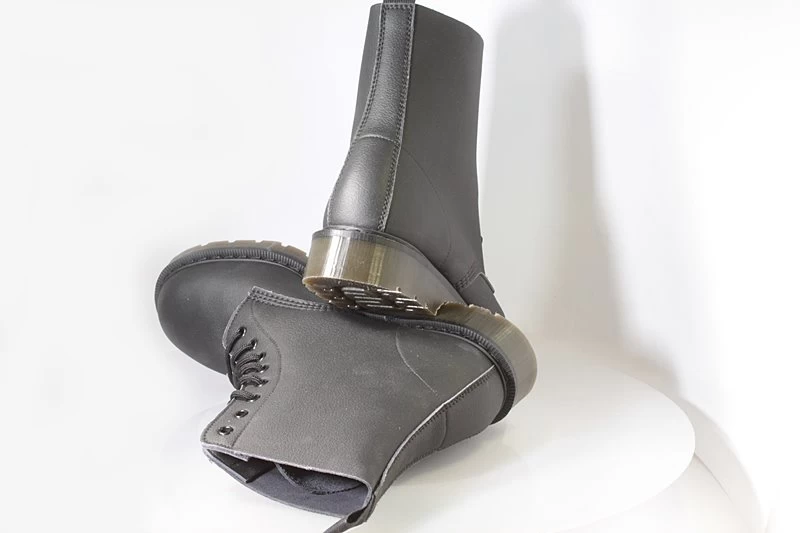
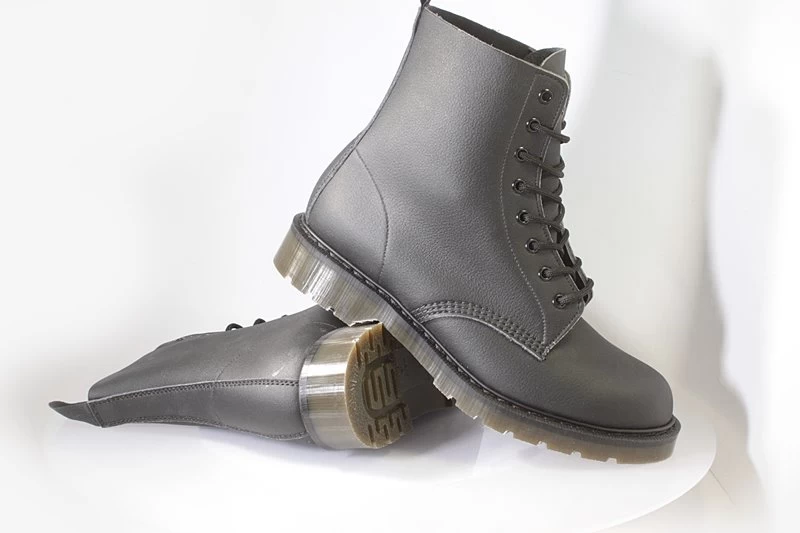
| Bouncing Boot all black | Bouncing Boot black & tan | Bouncing Boot mainly brown | Bouncing T-bar sz 3, 4, 8 | Bouncing Shoe |
|
|
|
|
|
|
|
|
|
| Some sizes of black bouncing boots are available at VCross - see their site for details - 73 Caledonian Road, London N1 9BT, two blocks east of Kings Cross station or north from the Thameslink exit; 020 7833 2315. Please check by phone before making a special trip to buy footwear as not all sizes are in stock. If they give you a reason why some sizes are not in stock, please pass it on as they are rushed, often staffed by volunteers, and not set-up to put requests in terms that suit a manufactuerer. They may not be aware of the political problems that UK manufacurers have faced. |
|
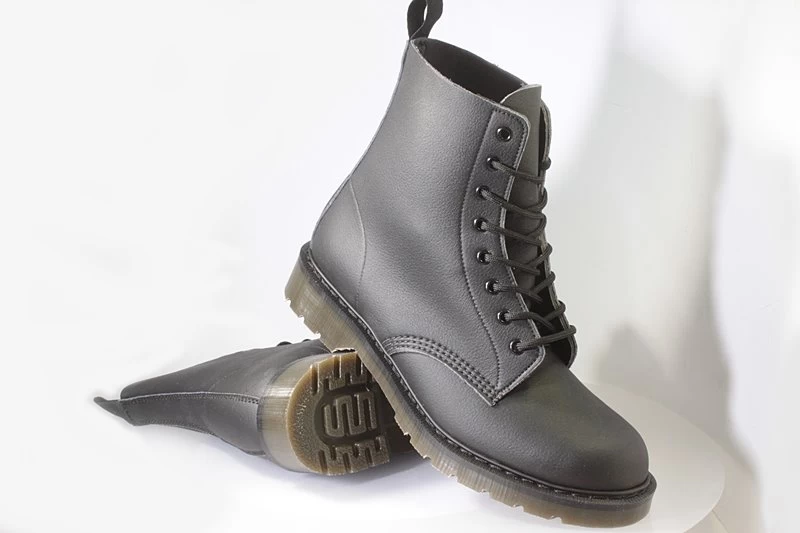
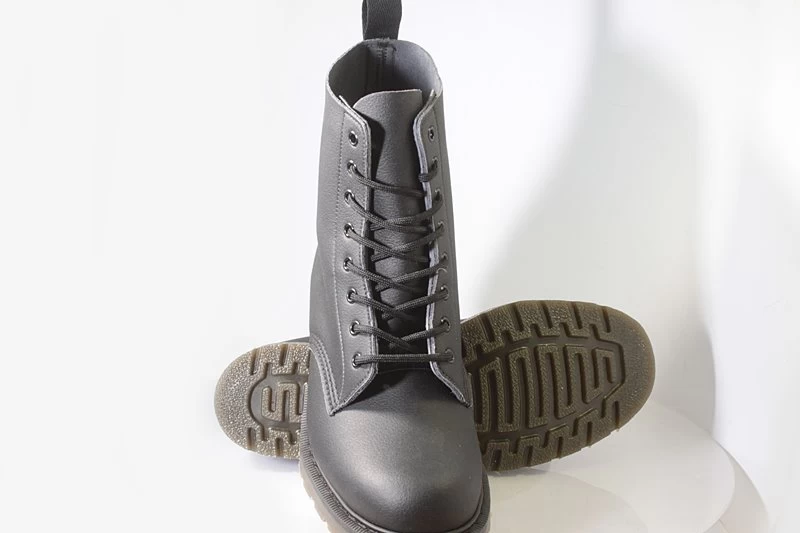
These vegetarian shoes and boots are made with an expensive stitching process that lengthens their life, bends easily, and can be repaired. Unlike cheaper glued-together boots, it allows for complex sole designs - in this case the Tredair sole made of up-market, crack-resistant plastic, a porous insole board and an injected layer of quality bungee. Most soles that claim to contain air will either contain a bit of carpet under-felt, which is good at moulding round your foot-shape, or a springy chamber with less moulding ability. The Tredair sole does both, as well as resisting cracks and bending easily. One customer writes "they feel very comfortable it will be a shame to go out in them - I think I'll use them inside and go out in my slippers!" You may not have heard of Tredair because of a historical accident. Until the early 80's, there was a brand of shoe that any good factory could make, as long as they paid for permission from Dr Martens family solicitors and met the quality standard - using a cushion sole, a sewn tag and bright yellow string sewing to emphasise the way that the shoes were made. A shared brand turned-out to be a very efficient way of structuring an industry - DMs were as ubiquitous as Cheddar Cheese, air force flight jackets or Champagne, and hardly needed any advertising. The competing factories provided a far better quality of seam-sewing than any brand-name boots could match for the price. Sewing things together in small batches with different designs and sizes is tricky. Factories have an idea of the number of operations they can do - often 100 - and the number involved in each batch which is often less in the factory but more in administration. When money isn't spent on brand advertising but is spent on getting through the dozens of operations instead, a wide range of shoes can be made and they get to reflect the times. Another reason for DMs success was a new Health & Safety act after the second war, introduced when boot companies were re-structuring for the civilian market, allowed again to compete with each other and to make their own designs. The act allows employers to be fined or loose a case in court if they don't check-up on safety standards such as the new toe-cap boots that had just been introduced, and they appreciated the yellow sewing & pull tag that made it easier to check that their staff were equipped. To make the law easier to follow, a tax concession was introduced. Several mail-order companies began selling at wholesale prices to employers and anyone else who could pay for a minimum order - very much like office stationary catalogues - and very different to other wholesalers at the time which would only sell to one shop in each high street and tried to control the prices. Some manual labourers were able to get DMs cheap or free from their employers, while other people could buy them from market stalls or the army-surplus shops that had sprung-up in most towns. In the early 80s, the government's economic policy was arguably to close most UK manufacturing industry, or that was the effect. Successor governments have not softened their exchange rate and inflation policy since then, which is now set by the Bank of England's monetary policy committee - not by people who make things. The largest factory making DMs survived by buying the brand and controlling all production itself. This also allowed quicker delivery times (which had never been a strength) and with a little more marketing DMs went mainstream, selling to mainstream shops rather than army surplus merchants. Where a few factories had experimented with bizarre variations like batches of mirror-finish boots or painted-on spider patterns, the new brand owners hired designers to tweak and change the finer points of the design and increase the range, moving away from the standard army-cut top and 1970s-shape sole. Over the past few years they saw dropping sales Younger people had forgotten why DMs had ever been a counter-cultural icon: they were no longer so ridiculously cheap or free, they had lost their association with muscle & toe caps, nobody thought about or worked in British industry any more, and the boots lacked the relaxed look that the e-generation liked. Footwear had become a style industry, with most trainer firms getting their stuff made in Chinese sweatshops, selling expensively in Europe and the US, and spending a big mark-up on advertising to promote falsely relaxed, liberal associations to their brands. One or two of the ex-factories and factories are still making cushion-sole derby boots with a Goodyear-welted seam, passing business between each other. They are not making many, because nobody has heard of them, and people assume that they are making a cheap imitation of the original product In the case of Tredair, we think they are making a better imitation. It has a better sole and a frankly better-looking seam And why should there be only one brand for cushion soles? why-these=are-expensiveWhy these are expensive Materials Taxes & wages Some more open countries are on a the Fairtrade list and count
as third world, often because of bad government which is not
addressed by buying a fair trade clothing. Tariffs against despots
would help too. Those companies which carry the trade mark offer
a better deal to staff in worse-run countries by providing some
benefits in a kind of Butlins camp for loyalists. This is a quote
from Tradecraft Wholesale linked from T Shirt and Sons, ethical
T shirt printers: If you would like to go further and promote hospitals with more than "4 beds", universal rather than "subsidised" education and services to people who have been evicted or left the "housing colony for 1800 workers" then look no further than the UK. Exchange rates PR, executive salaries, executive salary commitee salaries, PA to the CEO at HQ, national advertising, distribution warehouses, stock held in every high street and not just online, corporate events, government lobbying, a tower block in the most expensive city of London that looks like the corporate logo from above.. Next to no money is spent on the essentials in these categories and none on the non-essentials. That's partly why people believe the pundits who promote "ethical" manufacturing in China; UK manufacturers aren't throwing money at PR and leave customers to draw their own conclusions from the facts available, and support local manufacturing. People all over the world support local manufacturing. They benefit the world economy by taking an interest in the products of wherever they happen to be living, rather than the advertised brands or the brands with ethics wash and green wash credentials. VCross in Kings Cross that may have small amounts of stock in some sizes - please email or ring before making a trip in hope. Made in - Amnesty - Human Rights Watch - EthicalTrade.org#U - |
UK 2 3 4 5 6 7 8 9 10 11 12 EU 34 35.5 36.7 38 39 40.5 42 43 44.2 45.5 47 US male 3 4 5 6 7 8 9 10 11 12 13 US female 3½ 4½ 5½ 6½ 7½ 8½ 9½ 10½ 11½ 12½ 13½ |
Riotstopper
T shirts |