|
This page will always have links to human rights organisations'
pages on Ethiopia, and probably text about the problems too -
a news feed from human rights organisations working in Ethiopia,
or the point of view like the one below, or some mixture.
Perceived corruption
in Ethiopia is similar to the levels of Bolivia and Kazakhstan
- number 121 in the 2009 global corruption chart collated by
Transparency.org
Some action is being taken to reduce corruption, such as a register
of the property of state officials, but the country has not risen
in the charts and this pattern of corruption is bound to effect
aid payments meant for the poor from taxpayers of Europe - one
of the main sources of hard currency in the country.
Lots of rich people live in Ethiopia, a country funded
by European taxpayers much poorer than them.
There is a building boom in the main cities, even though most
Ethiopians live off allotments and could have no currency to
pay for air conditioned urban buildings or capochino cafes, any
more than consumer goods which are the main import. Warehouses
near Heathrow are used to export Jaguar and Mercedez parts to
third world countries by airmail. So much goes on Ethopian Airways
that the government there can allocate surplus space in the hold
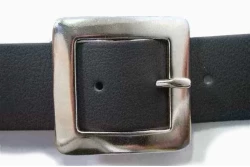
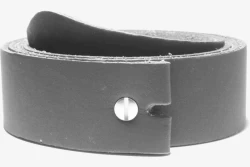
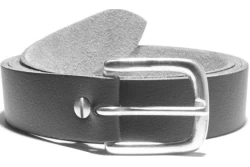
to exporters like like Sole Rebels, even after the large commercial
farmers have exported their cut flowers.
Macho culture is one of the causes of poverty in Ethiopia,
without self-criticism or apology & well-ingrained. The middle-aged
men who run religious organisations and government seem proud
of it and keen to lecture others.
- Women:
despite free primary school education (and more for pupils with
time to get to a school), the birth rate has caused a young and
excessive population. This may be a sign of a country without
pensions: parents need children to help in old-age. But it could
also be a sign of unequal power for women. The last paragraphs
of a Library of Congress document about human rights states that
"violence
and discrimination against women continue to be problems."
and gives an example.
- Gay people:
the celibate priesthood have campaigned for a constitutional
ban on homosexual acts, blaming gay people for pedophilia. There
is a high consensus that human rights for gay people should be
reduced or not increased. You can read the comment of a priest
here,
in the paragraph beginning "editor's note". Formal
law courts are overstretched in Ethiopia and give no human rights
to gays anyway: there is a three year jail sentence for homosexual
acts.
- Children:
The priesthood have some power over children and blame the
problem of child abuse by their guardians in orphanages and such
on gay people rather than celibate priests. A high proportion
of the sexual assault cases that make it to the Ethiopian court
system are about assaults on children.
- Provincial Clans and minorities:
Ethiopia is number 106 out of 176 on the Economist Intelligence
Unit's Democracy
Index. Elections have co-incided with imprisonment of opposition
groups. The civil war with Eritrea proved that cessation could
not be handled easily.
The central government uses its army and police to prevent civil
war between clans and minorities, and splintering of clan areas
into independent states. It also volunteers peace-keeping forces
to trouble spots round the world.
According to Human Rights Watch, these civil wars and peace-keeping
exercises are carried out without any regard for human rights,
and human rights groups themselves can only function with difficulty
in the main cities. A UN embargo on arms exports to Ethiopia
may have reduced some of the spending on things like 43 fighter
jets which the government has little use for, but the police
has recently doubled in size and the army remains large even
after an end to the war with Eritrea.
- Opposition candidates & MPs
Just as the elite have faced an arms embargo, they have been
forced to run a parliamentary democracy to get their aid, but
their instincts cannot handle parliamentary democracy. In a quick
google to research this page, one of the sites I found was about
the opposition radio station being forced to take its web site
off the net. The ruling elite in Ethiopia are simply too macho
and too military in the respect they expect for opposition to
be part of their system.
- Animals:
Ethiopia is quoted as the 10th largest exporter of livestock
in the world despite over-use of land, a low water table, and
the Livestock's
Long Shadow UN report on the effects of animal farming
in reducing the quality of land and providing a less efficient
food chain than plant farming. It is a long document but the
executive
summery is clear.
The Addis government is aware of the problems of over-farming.
The 2007
Library of Congress document above states that the government
is
relocating some 2 million highland farmers to land at lower
elevations to address problems of population pressure and exhausted
farming plots
If there isn't enough land to feed humans, there is still plenty
of land to feed animals, exporters, and the trade in imported
consumer goods. The National Bank of Ethiopia controls currency
exchange so it has accurate figures for livestock exports which
were US$74million in the year 2000. (The bank website is down
so recent figures aren't available - more recently the EU may
be allowing duty free leather trade rather than livestock to
encourage Ethiopian tanners).
One patriach who advocates discrimination against gays also advocates
discrimination against animals to try and give a rational balance
to what he calls discrimination.
"This is something very strange in Ethiopia, the land
of the Bible that condemns this very strongly," said
Abune Paolos,
the patriarch of Ethiopia's Orthodox Church, the largest
religious denomination but speaking in the accent of Pik
Botha "For people to act in this manner they have
to be dumb, stupid like animals," he said. "We
strongly condemn this behaviour. They have to be disciplined
and their acts discriminated, they have to be given a lesson",
at the European Union's taxpayer's expense because his unsustainable
way of life that has lowered the water table in Ethopia and over-populated
it. BBC
equality & diversity trainers might agree, and say that
it is part of these people's culture to be treated badly by their
patriachs and you have to take the nation's culture as a whole
and ignore more rational minorities within it, but that again
is in the style of Pik
Botha.
These European taxpayers are much like Ethopian taxpayers and
include parents, women, gay people, vegetarians, rational people
and people who's political views are different to the patriach's.
One of two of them might have just left Ethopia and be trying
to make apparel in somewhere like London's Tower Hamlets or in
Leicester, where there is no help from technical colleges or
subsidy for innovators' consultancy, nor effort to make sure
there is a good trade directory. All these resources are spent
on exporting "designers" to authoritairan countries
or importing fair trade products.
- An African Journey with Jonathan Dimbleby
http://www.bbc.co.uk/programmes/b00spp7h
is a series of three travel programs that celibrate good &
unreported things in africa, but do not discuss the compromises
that have to be made by those who live in africa, leave it, donate
to it through taxes or privately or who buy african goods. This
is a pity because just about every living thing in ethiopia is
discriminiated against except the biggoted grant-artists who
run the country with so much pride, and, with luck, visiting
journalists with credit cards.
Those who work in TV crews are not typical Europeans; they are
not likely to be exposed to discrimination by african elites
nor to mind the paying taxes to prop-up african elites nor to
have much competition from fairtrade TV programs produced in
Africa that get free publicity from journalists and subsidised
marketing (now cancelled) from the Department For International
Trade and Development. They are unlikely to compete for jobs
with the best and fittest of Ethiopia who have been forced to
work in Europe by the macho fecklessness that is ethiopain government.
They have more in common with Members of the European Parliament
or decision makers at the Department For International Development
who want improvements sometime, maybe never, and still keep signing
the cheques.
Most of these points are criticisms of a macho culture and
aid which sustains their unsustainable way of life.
This last point about animals is a criticism of those Euro
MPs who allow duty-free
imports of hydes to the European Union from the poorest countries
in order to help them develop.
When the import is of factory-farmed cut flowers it's hard to
see how this wealth can trickle down to ordinary people in ethiopia
or whether it helps them at all, or hinders. It's odd that so
much aid is and so many favours are given to the elite in Ethiopia
with apparently so few conditions.
When the import is livestock it's clearly wrong. There is no
need to know anything about Ethiopia to guess that Ethiopia can't
afford livestock. It can't sustain it's human population. So
it should not be exporting livestock to the European Union or
the US.
Those few of us who are members
of the European Parliament or Congress and on the right committees
can improve the lives of Ethiopians at a stroke by banning animal
imports from Ethiopia.
Those of use who talk and write and are interested in fair trade
products can help as well, by putting criticism of corruption
next to pictures of people smiling and fair trade products. We
can also post our MEPs copies of the executive summery of Livestock's
Long Shadow and ask that the report be considered when giving
import concesssions to developing countries.
That is why this column is here. With luck, others people will
write better argued and more informed criticism, but the idea
of criticising third world elites at the same time as buying
fair trade products is worth trying. |